
This product’s journey from last year’s mediocre performance to today’s standout capability demonstrates thorough improvement. After hands-on testing and comparing several options, I found that choosing the right TV size for a gaming desk isn’t just about screen inches—it’s about balancing clarity, comfort, and setup space. A good fit feels immersive without overwhelming your desk space, which I experienced firsthand when setting up multiple sizes and styles.
What really makes a difference is how a TV blends with your gaming setup—some screens are too large, making navigation awkward, while others are too small for full immersion. After trying various options, I recommend the JARHETUN TV Stand with LED Lights for 55″ TV, Black. It offers perfect size, stable design, and cool lighting to enhance your gaming atmosphere. This setup proved to be the sweet spot for comfort and style, making it the ideal choice for most gaming desks.
Top Recommendation: JARHETUN TV Stand with LED Lights for 55″ TV, Black
Why We Recommend It: This stand combines a 55-inch size perfect for immersive gaming without taking up excessive space. Its sturdy steel frame and adjustable feet ensure stability on uneven floors. The built-in LED lights with 22 colors and dynamic modes reduce eye strain and add ambiance. Unlike other options, it offers ample storage for consoles, accessories, and decor, all integrated into a sleek design. These features collectively make it the best choice for a gaming desk.
Best tv size for gaming desk: Our Top 3 Picks
- JARHETUN TV Stand with LED Lights for 55″ TV, Black – Best TV size for large gaming setup
- TJOY 14″ RGB Gaming Light Bar with Music Sync, Black – Best for small living room
- Ledagic RGB Light Bar with Music Sync & Remote – Best for bedroom
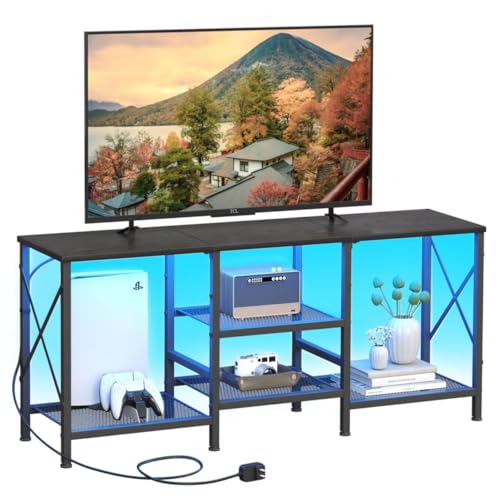
JARHETUN TV Stand with LED Lights for 55″ TV, Black
- ✓ Vibrant LED lighting options
- ✓ Spacious and organized shelves
- ✓ Easy to assemble
- ✕ LED controls can be glitchy
- ✕ Slightly lower height
| Dimensions | 47.2 inches W x 11.8 inches D x 19.9 inches H |
| Suitable TV Size | Designed for 55-inch TVs |
| Material | High-quality MDF board for the top surface |
| Storage Capacity | Three open shelves plus fabric drawer |
| LED Lighting | LED light strips with 22 colors and 22 dynamic modes, controllable via manual key or smartphone app |
| Frame Construction | Steel frame with X-shape open design, adjustable feet, and anti-tip device for stability |
Right away, this JARHETUN TV stand catches your eye with its sleek black finish and a surprisingly sturdy build. The open steel frame with its X-shape design feels solid, giving you confidence that it can handle your TV and all your gaming gear.
The standout feature for me was the LED lights. They come with 22 colors and 22 modes—perfect for customizing your vibe.
Whether you’re gaming late into the night or just relaxing, you can switch up the lighting easily via the app or manual button. It really adds a whole new dimension to your setup.
Assembly was straightforward, thanks to clear instructions and included tools. The top MDF surface is smooth and easy to clean, and the adjustable feet helped level the stand on my uneven floor.
The open shelves are roomy, making it simple to organize consoles, DVDs, or even a few decorative items without clutter.
What I also appreciated was the versatility. Besides being a perfect TV stand for a 55-inch screen, it easily doubles as extra storage in a bedroom or hallway.
The fabric drawer is a nice touch for small accessories or remote controls. Overall, it’s a compact yet functional piece that fits well in various spaces.
One minor downside is that the LED controls can sometimes be finicky, especially via the app. Also, the height is a little lower than some other stands, so if you prefer a higher viewing angle, you might want to consider a different option.
Still, for the price, it’s a pretty solid pick.
TJOY 14″ RGB Gaming Light Bar with Music Sync, Black

- ✓ Easy to customize colors
- ✓ Versatile mounting options
- ✓ Responsive music sync
- ✕ Limited brightness
- ✕ Connected bars cannot be separated
| Light Source | High-quality LED beads with over 16 million color options |
| Brightness | 60 Lumens |
| Control Methods | APP (Bluetooth), Remote, Button on USB cable |
| Color Modes | Multiple preset scenes, DIY color, music synchronization |
| Power Supply | USB connection (6ft cable), powered via USB port |
| Adjustability | Rotatable up to 90°, can be laid flat or mounted vertically |
There’s nothing more frustrating than trying to set the perfect gaming mood, only to be met with dull, uninspiring lighting that doesn’t match your vibe. You want something that adds ambiance without overwhelming your space.
That’s where the TJOY 14″ RGB Gaming Light Bar really shines.
Right out of the box, I noticed how sleek and black it looks—compact enough to fit behind my monitor yet stylish enough to leave out as part of my setup. The flexible rotation up to 90° makes it easy to aim the light exactly where I want it, whether behind my monitor or under my desk.
The real magic happens with the colorful lighting. With over 16 million colors and multiple modes, I could easily switch from a calm blue to a vibrant rainbow for a party.
The music sync feature is surprisingly responsive—cranking up the volume makes the lights dance perfectly in sync, creating an immersive gaming or movie experience.
The controls are straightforward: the app, remote, or USB buttons. The app offers tons of options like DIY colors, preset scenes, and timers, making customization effortless.
Plus, mounting options are versatile—stand, lay flat, or attach behind your TV or monitor with included brackets—adapting to any setup.
While it’s not bright enough to light up an entire room, it’s perfect for mood lighting and enhancing your gaming space. The only downside I noticed is that the two light bars are connected and not usable separately, which might limit flexibility for some setups.
Ledagic RGB Light Bar with Music Sync & Remote

- ✓ Easy to install
- ✓ Responsive music sync
- ✓ Wide pattern selection
- ✕ Limited white modes
- ✕ Basic remote control
| Light Source Type | RGBW LED strip with 16 million colors |
| Power Supply | USB powered (compatible with power bank, USB charger, TV, monitor, PC mainframe) |
| Length | 60 inches (152.4 cm) |
| Control Options | Remote control and mobile app (LotusLamp X) with 24-button multifunction remote |
| Lighting Modes | 64+ patterns including strobe, illusion, jump, energy, gradient, running, chasing, fluttering |
| Brightness Adjustment | Dimmable from 1% to 100% |
Just as I was about to settle in for a gaming marathon, I noticed my old LED strip wasn’t cutting it anymore. Out of nowhere, I decided to give the Ledagic RGB Light Bar a shot—and I was surprised by how much it changed the vibe.
This light bar is sleek and compact, about the size of a small soda can, with a sturdy USB plug that feels reliable. The 60-inch cord gives you plenty of flexibility to position it next to your TV or console without fuss.
What really caught me off guard was how easy it was to install—just clip it on, plug in, and you’re set.
The real magic starts with the music sync feature. I played some high-energy tunes, and the lights danced perfectly to the beat, creating an immersive atmosphere.
It’s impressive how responsive the high-sensitivity sensor is—no lag, just instant reactions.
Switching between modes is a breeze using the remote, and the 64+ patterns mean you’ll never get bored. I especially enjoyed the white brightness mode for gaming, which provides clear illumination without overpowering the screen.
The app also makes customization simple, letting me tweak brightness, colors, and timers from anywhere.
Adjusting the brightness from 1% to full was smooth, giving me flexibility for different scenes. Plus, the line control switch on the power port is a handy backup if you lose the remote or want quick access.
Overall, it’s a versatile, fun addition that blends style with practicality.
What Is the Optimal Viewing Distance for Different TV Sizes?
The benefits of adhering to the optimal viewing distance include reduced eye strain, a more enjoyable viewing experience, and improved picture clarity. For gaming desks specifically, the right TV size can enhance the gaming experience by providing a wider field of view, improving peripheral awareness, and fostering a more engaging atmosphere. The ideal TV size often recommended for gaming desks ranges from 32 to 55 inches, depending on the desk’s size and the distance from the screen.
Best practices for achieving optimal viewing distance include measuring the space available for the TV setup and ensuring that the screen height is at eye level to prevent neck strain. For gamers, it is also advisable to take breaks to rest the eyes, particularly during long gaming sessions. Additionally, investing in adjustable furniture can help maintain the correct viewing distance as needed.
How Does the Viewing Distance Change Based on TV Size?
The optimal viewing distance for a TV can vary based on its size, especially when considering setups like a gaming desk.
- 32-inch TV: For a 32-inch TV, the recommended viewing distance is around 3 to 5 feet. This size is ideal for small gaming desks and can provide a more immersive experience without straining the eyes.
- 40-inch TV: A 40-inch TV should ideally be viewed from about 4 to 6.5 feet away. This size strikes a balance between screen real estate and manageable space, making it suitable for a mid-sized gaming setup.
- 50-inch TV: The best viewing distance for a 50-inch TV is approximately 5 to 8 feet. This larger screen allows for detailed graphics and experiences in gaming, but requires a bit more space to avoid eye strain.
- 55-inch TV: A 55-inch TV is best viewed from 6 to 9 feet. Gamers can enjoy an expansive field of view, enhancing the experience, but it may require a larger desk or room setup to accommodate the distance.
- 65-inch TV: For a 65-inch TV, the viewing distance increases to about 7 to 10 feet. This size is excellent for immersive gaming, but may not be practical for smaller desks, as it needs ample space to optimize the viewing experience.
- 75-inch TV: The recommended viewing distance for a 75-inch TV is 8 to 12 feet. This size provides an extremely immersive experience, perfect for large gaming setups, but can be overwhelming in smaller environments.
What Is the Best Distance for Immersive Gaming Experience?
Benefits of choosing the appropriate TV size include improved visual clarity, reduced glare, and a more comfortable viewing experience. This can lead to better gameplay performance, especially in fast-paced games where reaction time is critical. Additionally, a better gaming setup can enhance social interactions when playing with friends, as a larger screen allows for shared experiences.
Best practices for selecting the right TV size involve measuring the distance from your gaming chair to the wall where the TV will be mounted. Users should also consider their gaming habits and preferences; casual gamers may prefer larger screens for an immersive experience, whereas competitive gamers might opt for smaller sizes to maintain visual acuity. Testing different sizes in-store before purchasing can also help in making an informed decision.
What Factors Should Be Considered in Choosing the Right TV Size for Gaming?
When selecting the best TV size for a gaming desk, several factors come into play to ensure an optimal gaming experience.
- Viewing Distance: The distance between your eyes and the screen significantly influences the size of the TV you should choose. For gaming desks, a distance of 4 to 6 feet typically recommends a TV size between 40 to 55 inches for an immersive experience without sacrificing clarity.
- Resolution: The resolution of the TV also affects the ideal size; higher resolutions like 4K allow for larger screens without visible pixelation. If you’re opting for a 4K TV, you can comfortably go for a larger size since the increased pixel density makes it easier to sit closer without noticing any blurriness.
- Desk Space: The physical dimensions of your gaming desk must accommodate the TV size you choose. Ensure that the TV fits well on your desk or wall mount without overcrowding the space, allowing for comfortable access to controllers and other gaming peripherals.
- Field of View: A larger screen can enhance your field of view, allowing for more immersive gameplay. However, if the screen is too large for your desk setup, you may find it difficult to see the entire screen without moving your head excessively, compromising comfort during long gaming sessions.
- Refresh Rate: The refresh rate of the TV is critical for gaming performance, especially in fast-paced games. A TV with a higher refresh rate (e.g., 120Hz) not only provides smoother motion but also allows for larger screen sizes to be more effective in displaying fast-moving graphics without motion blur.
- Input Lag: Input lag is the delay between your actions on the controller and what appears on screen, making it crucial for competitive gaming. Look for TVs with low input lag (ideally under 20 ms) to ensure that the size you choose doesn’t negatively impact your gameplay responsiveness.
- Type of Games Played: Consider the types of games you play most often; for example, a larger screen might enhance the experience for open-world games, while a smaller TV might be preferable for competitive shooters where precision is key. Tailoring the TV size to the gaming genre can enhance your overall enjoyment and performance.
How Does the Resolution of a TV Impact Gaming Quality?
- 1080p (Full HD): A resolution of 1920×1080 pixels, this is the standard for many games and consoles, offering decent clarity without demanding extensive hardware.
- 1440p (Quad HD): With a resolution of 2560×1440 pixels, this option provides sharper images and finer details, making it ideal for gamers who want a step up from 1080p without going to 4K.
- 4K (Ultra HD): Boasting a resolution of 3840×2160 pixels, 4K TVs deliver stunning visuals with increased detail and depth, enhancing the gaming experience significantly, especially for visually rich games.
- Refresh Rate: While resolution focuses on image clarity, refresh rate determines how smoothly the visuals appear on screen, with higher rates (like 120Hz) providing a more fluid motion during fast-paced gaming.
- Input Lag: This is the delay between pressing a button and seeing the action on screen; low input lag is crucial for competitive gaming, where every millisecond counts.
- HDR (High Dynamic Range): HDR enhances the contrast and color accuracy of the TV, allowing for more vibrant images and a wider range of brightness, which can make games look more realistic and immersive.
1080p TVs are still popular among gamers due to their affordability and acceptable quality for most games. They provide a good balance for individuals gaming on a budget or those who do not prioritize cutting-edge visuals.
For those looking for sharper images without diving into 4K technology, 1440p delivers a more detailed resolution that allows gamers to appreciate finer graphics, making it a favorite among PC gamers.
4K resolution significantly elevates the gaming experience with breathtaking visuals, but it requires a powerful gaming console or PC to fully leverage the capabilities, making it more suitable for high-end setups.
The refresh rate can greatly enhance gameplay, with higher refresh rates ensuring that fast-moving scenes are smooth and free of blur, which is particularly beneficial for action-packed or competitive games.
Input lag is a critical factor in gaming, especially for competitive players; TVs with low input lag will respond more quickly to commands, providing a more responsive gaming experience.
HDR technology can make games look more stunning by improving color depth and contrast, allowing players to experience more vibrant worlds and lifelike graphics that enhance immersion.
What Role Does Refresh Rate Play in Gaming Performance?
The refresh rate significantly impacts gaming performance by affecting how smoothly images are displayed on the screen.
- Definition of Refresh Rate: The refresh rate is the number of times per second that a display updates its image, measured in hertz (Hz).
- Impact on Motion Clarity: A higher refresh rate leads to smoother motion, reducing motion blur and improving the clarity of fast-moving graphics in games.
- Input Lag: Refresh rates can influence input lag, which is the delay between a player’s action and the corresponding visual response on screen, affecting gameplay responsiveness.
- Sync Technologies: Technologies like G-Sync or FreeSync work in conjunction with refresh rates to eliminate screen tearing and provide a more fluid gaming experience.
- Optimal Refresh Rates for Gaming: Different types of games may benefit from varying refresh rates, with fast-paced games often requiring higher refresh rates (144Hz or more) for competitive play.
The refresh rate is the number of times per second that a display updates its image, measured in hertz (Hz). A higher refresh rate means that the screen can display more frames per second, which is particularly beneficial in fast-paced gaming scenarios where every frame counts for performance and visual fluidity.
A higher refresh rate leads to smoother motion, reducing motion blur and improving the clarity of fast-moving graphics in games. This enhancement allows players to track fast movements more easily and react quickly, which can be crucial in competitive settings.
Refresh rates can influence input lag, which is the delay between a player’s action and the corresponding visual response on screen, affecting gameplay responsiveness. Lower input lag is vital for competitive gamers who rely on precise timing and quick reactions.
Technologies like G-Sync or FreeSync work in conjunction with refresh rates to eliminate screen tearing and provide a more fluid gaming experience. These technologies synchronize the refresh rate of the display with the frame rate being output by the graphics card, ensuring smooth gameplay without interruptions.
Different types of games may benefit from varying refresh rates, with fast-paced games often requiring higher refresh rates (144Hz or more) for competitive play. On the other hand, slower-paced games may not need such high refresh rates, allowing players to choose displays based on their specific gaming preferences and styles.
Which TV Sizes Are Recommended Based on Gaming Desk Configurations?
The best TV sizes for gaming desks can vary based on the setup and viewer distance.
- 32-inch TV: Ideal for smaller gaming setups or desks, providing a comfortable viewing distance of about 4-6 feet.
- 43-inch TV: A great mid-range option that works well for most gaming desks, suitable for viewing distances of 5-8 feet.
- 55-inch TV: Recommended for larger desks or setups where the viewer can sit back 6-10 feet, offering an immersive experience.
- 65-inch TV: Best for spacious gaming areas, allowing for a viewing distance of 8-12 feet, perfect for multiple players or an immersive experience.
- 75-inch and larger TVs: Best suited for dedicated gaming rooms rather than desks, as they require significant space and a viewing distance of at least 10-15 feet.
The 32-inch TV is perfect for compact spaces, making it easy to keep your gaming desk clutter-free while still enjoying a decent picture quality. It’s particularly suitable for those who game in close proximity to the screen.
The 43-inch TV strikes a balance between size and space, offering a wider viewing angle and better immersion without overwhelming a smaller desk setup. This size is versatile and can accommodate various gaming styles.
A 55-inch TV provides a more cinematic experience and is ideal for gamers who enjoy longer sessions from a comfortable distance. It allows for larger graphics and greater detail, enhancing gameplay significantly.
For serious gamers or those who have a dedicated gaming area, a 65-inch TV can transform gaming into a full-fledged entertainment experience, especially with multiple players. The increased size also supports larger visual effects and a more engaging atmosphere.
Finally, TVs 75 inches and above are typically reserved for dedicated gaming rooms or living spaces where there is ample distance from the screen. While they offer stunning visuals, they may not be practical for a standard gaming desk environment.
What Size TV Is Ideal for a Compact Gaming Space?
The ideal TV size for a compact gaming space depends on the distance from the screen and the gaming setup.
- 32 inches: A 32-inch TV is often recommended for small gaming desks where the viewing distance is around 4 to 6 feet. Its compact size ensures that it fits well in limited spaces without overwhelming the viewer.
- 40 to 43 inches: This size range is suitable for a slightly larger desk setup, allowing for a more immersive gaming experience while still being manageable in smaller rooms. At a distance of about 6 to 8 feet, this size provides a good balance between screen real estate and clarity.
- 50 inches: A 50-inch TV can work for compact spaces if the viewer sits further back, ideally around 8 to 10 feet. It offers a more cinematic experience but may require repositioning of furniture to accommodate the larger screen.
- Consideration of Resolution: Regardless of size, opting for a 4K resolution is advisable as it provides sharper images, especially on larger screens. This ensures that even with a compact TV setup, the gaming experience remains visually appealing.
- Screen Type: LED and OLED screens are popular choices for gaming due to their brightness and color accuracy. The choice between them may depend on budget and preference for deeper blacks and contrast, which OLED offers.
How Should You Choose a TV Size for a Spacious Gaming Setup?
Choosing the right TV size for a spacious gaming setup involves considering several key factors to enhance your gaming experience.
- Viewing Distance: The distance between the TV and your gaming setup significantly impacts the size you should choose. A general rule of thumb is to have the TV size in inches equal to the viewing distance in feet; for example, if you’re sitting 8 feet away, a 65-inch TV would be ideal.
- Screen Resolution: The resolution of the TV plays a crucial role in how well you can see details in games. Higher resolutions, such as 4K, allow for larger screens without losing clarity, making a bigger TV more suitable for immersive gameplay.
- Room Layout: The overall layout of your gaming space—including furniture placement and wall size—can influence the size of the TV you choose. Ensure that the TV fits well within the aesthetic of your room and can be comfortably viewed from your gaming position.
- Gaming Type: The type of games you play can also determine the best TV size; fast-paced games may benefit from a larger screen for better peripheral vision, while more story-driven games may not require as large a display. Consider the genres you favor to find a balance between size and gameplay needs.
- Budget: Your budget will ultimately set limits on the size and quality of the TV you can afford. Larger TVs can be significantly more expensive, so it’s important to find a size that fits both your gaming environment and your financial constraints.
What Are the Advantages of Using a TV Over a Monitor for Gaming?
The advantages of using a TV over a monitor for gaming include larger screen size, enhanced viewing distance, and built-in smart features.
- Larger Screen Size: TVs generally offer larger screen sizes compared to monitors, allowing for an immersive gaming experience. A bigger display can enhance gameplay by providing a broader field of view, making it easier to spot enemies or navigate expansive environments.
- Enhanced Viewing Distance: TVs are designed to be viewed from a greater distance, which can be beneficial for couch gaming or larger spaces. This distance allows players to relax while still enjoying high-quality visuals without straining their eyes, which is particularly advantageous during long gaming sessions.
- Built-in Smart Features: Many modern TVs come equipped with smart features such as streaming services and built-in apps, making them versatile for entertainment beyond gaming. This integration allows users to watch shows, movies, or stream content without needing additional devices, enhancing the overall utility of the setup.
- Higher Refresh Rates and Lower Input Lag: Some TVs now offer competitive refresh rates and low input lag, making them suitable for fast-paced gaming. These specifications ensure smoother gameplay and responsiveness, which are critical for competitive gaming experiences.
- Multiple HDMI Ports: TVs typically come with multiple HDMI ports, allowing gamers to easily connect various devices such as consoles, streaming boxes, or PCs. This connectivity convenience makes it simple to switch between different gaming and entertainment setups without hassle.
Are There Specific Types of Games That Benefit More from a TV?
There are specific types of games that can benefit significantly from using a TV, particularly in terms of immersion and visual experience.
- Single-Player Adventure Games: These games often feature expansive worlds and rich narratives that are best experienced on a larger screen. The detailed graphics and cinematic storytelling can draw players into the game, making the bigger screen size enhance the overall experience.
- Racing Games: Racing games benefit from a larger field of view, allowing players to see more of the track and better gauge their surroundings. A big TV can provide a more immersive experience, making players feel like they are truly part of the race.
- First-Person Shooters (FPS): While competitive FPS games may require quick reflexes that smaller screens can facilitate, a larger TV can still enhance the experience through improved visibility of the environment. Players can spot opponents more easily and enjoy the detailed graphics that a larger display can offer.
- Multiplayer Party Games: These games are often played with friends or family, making a larger screen beneficial for group viewing. A big TV allows everyone in the room to see the action clearly, fostering a more engaging and interactive gaming environment.
- Role-Playing Games (RPGs): RPGs often have intricate storytelling and detailed graphics, making them ideal for larger screens. The vast worlds and character designs can be appreciated more fully on a big display, enhancing the player’s engagement with the game.
How Should You Position a TV for the Best Gaming Experience?
Finding the best TV size for a gaming desk can significantly enhance your gaming experience by optimizing visibility and immersion.
- Screen Size: The ideal screen size for gaming typically ranges from 32 to 55 inches, depending on the distance from your seating position to the TV.
- Resolution: Higher resolutions like 4K are preferable as they provide sharper images, which can enhance gameplay and detail visibility.
- Refresh Rate: A higher refresh rate, such as 120Hz, allows for smoother motion and reduces motion blur, which is critical for fast-paced gaming.
- Input Lag: TVs with low input lag (ideally under 20ms) ensure that your actions are registered quickly, providing a more responsive gaming experience.
- Viewing Angle: Consider the TV’s viewing angle; IPS panels typically offer better viewing angles compared to VA panels, ensuring consistent colors and brightness from different positions.
- HDR Capability: High Dynamic Range (HDR) enhances color contrast and brightness, making games look more vibrant and realistic.
- Connectivity Options: Ensure the TV has enough HDMI ports and supports HDMI 2.1 for next-gen consoles and high-speed gaming accessories.
Screen size is crucial as a larger screen can enhance immersion, but it’s important to choose one that fits well within your gaming desk setup without overwhelming your field of view. For example, a 32-inch TV might be perfect for a close-range setup, while a 55-inch is better suited for larger spaces where you can sit further away.
Resolution impacts how clear and detailed the visuals on the screen appear. 4K TVs provide four times the resolution of standard HD, which allows for more intricate details in games, making them visually stunning and engaging.
A higher refresh rate allows for a smoother gaming experience because it refreshes the image on the screen more frequently per second, which is particularly beneficial in competitive gaming where every millisecond counts. This helps reduce motion blur and keeps fast-moving images crisp.
Input lag is the delay between your action on the controller and its display on the screen; a lower input lag translates to a more responsive gaming experience, which is especially important in fast-paced games where timing is critical.
The viewing angle of your TV can affect the color and brightness you perceive from different positions. If you plan to play games from various angles, an IPS panel can help maintain color accuracy and brightness, making it a better choice for multi-player setups.
HDR capability significantly enhances visual quality, providing a broader spectrum of colors and improved contrast levels. This makes the gaming experience richer, with more lifelike graphics that can truly immerse you in the game world.
Lastly, having multiple connectivity options is essential for connecting various devices like gaming consoles, PCs, and streaming devices. HDMI 2.1 support is particularly important for future-proofing your setup, especially if you plan to use the latest gaming consoles that can take advantage of high refresh rates and resolutions.
What Are the Best Mounting Options for TVs in Gaming Spaces?
| Mount Type | Installation Ease | Viewing Angle |
|---|---|---|
| Wall Mount | Requires drilling; can be tricky for beginners. Weight capacity varies; ensure compatibility with your TV. | Allows for optimal viewing angle, especially for large screens. Recommended for TVs 50″ and larger. |
| TV Stand | Easy to set up; no tools required. Generally supports a wide range of TV sizes. | Limited flexibility; can be adjusted by moving the stand. Ideal for TVs up to 55″. |
| Ceiling Mount | Complex installation; may require professional help. Often supports larger TVs, but check weight limits. | Great for space-saving; offers unique viewing perspectives. Recommended for TVs 65″ and larger. |
What Are the Common Mistakes Gamers Make When Choosing a TV Size?
- Choosing Size Over Resolution: Many gamers prioritize a larger screen size without considering the resolution, which can lead to a less detailed image. A 4K resolution is ideal for larger screens, but if the screen is too big for the viewing distance, the benefits of high resolution may diminish.
- Ignoring Viewing Distance: Some gamers don’t account for how far they will be sitting from the TV. The optimal viewing distance can impact the immersive experience and visual clarity; sitting too close can cause discomfort and distortion, while being too far can make it difficult to see details.
- Neglecting Refresh Rate: A common mistake is not considering the refresh rate of the TV. A higher refresh rate, such as 120Hz, provides smoother motion, which is crucial in fast-paced gaming. If gamers choose a TV with a lower refresh rate, they may experience motion blur, especially during action sequences.
- Overlooking Input Lag: Input lag can significantly affect gameplay, particularly in competitive gaming. Gamers often forget to check the input lag of a TV; a high input lag can lead to delays between a player’s actions and what appears on screen, hindering performance and responsiveness.
- Disregarding HDMI Ports and Compatibility: Gamers sometimes fail to check the number and type of HDMI ports available on the TV. This can be problematic if they want to connect multiple devices like consoles and PCs; insufficient ports can lead to the inconvenience of constantly switching connections.
- Not Considering Space Constraints: Many gamers do not properly consider the physical space available for their gaming setup. Choosing a TV that is too large for the designated area can lead to a cramped environment and may affect the overall comfort and accessibility of the gaming desk.
- Focusing on Aesthetics Over Functionality: While the appearance of a TV is important, gamers often prioritize looks over functionality. A stylish TV might not have the best features for gaming; therefore, it is crucial to ensure that the TV meets performance needs rather than just fitting a design preference.
How Can You Avoid Overestimating TV Size for Your Space?
Viewing distance refers to how far away you will be sitting from the TV. A general guideline is that the optimal screen size can be determined by dividing your viewing distance (in inches) by 1.5 for HD TVs or 1 to 1.5 for 4K TVs, ensuring a comfortable and immersive experience.
Screen resolution plays a vital role in determining how large your TV can be without compromising image quality. Higher resolution screens, like 4K, allow for larger displays because they maintain clarity even from closer distances.
Desk space must be taken into consideration as well; a TV that is too large can crowd your gaming area, leaving insufficient room for other essential equipment like consoles and monitors, which might hinder your gaming experience.
Lastly, personal preference greatly influences the ideal TV size. Some gamers enjoy a large screen for a more immersive experience, while others may prefer a more compact setup that allows for ease of use and better visibility of the entire screen.
Related Post: